At Castleview Clinic we are pleased to offer Robotic-Assisted Total Hip Replacement the latest technology in hip surgery.
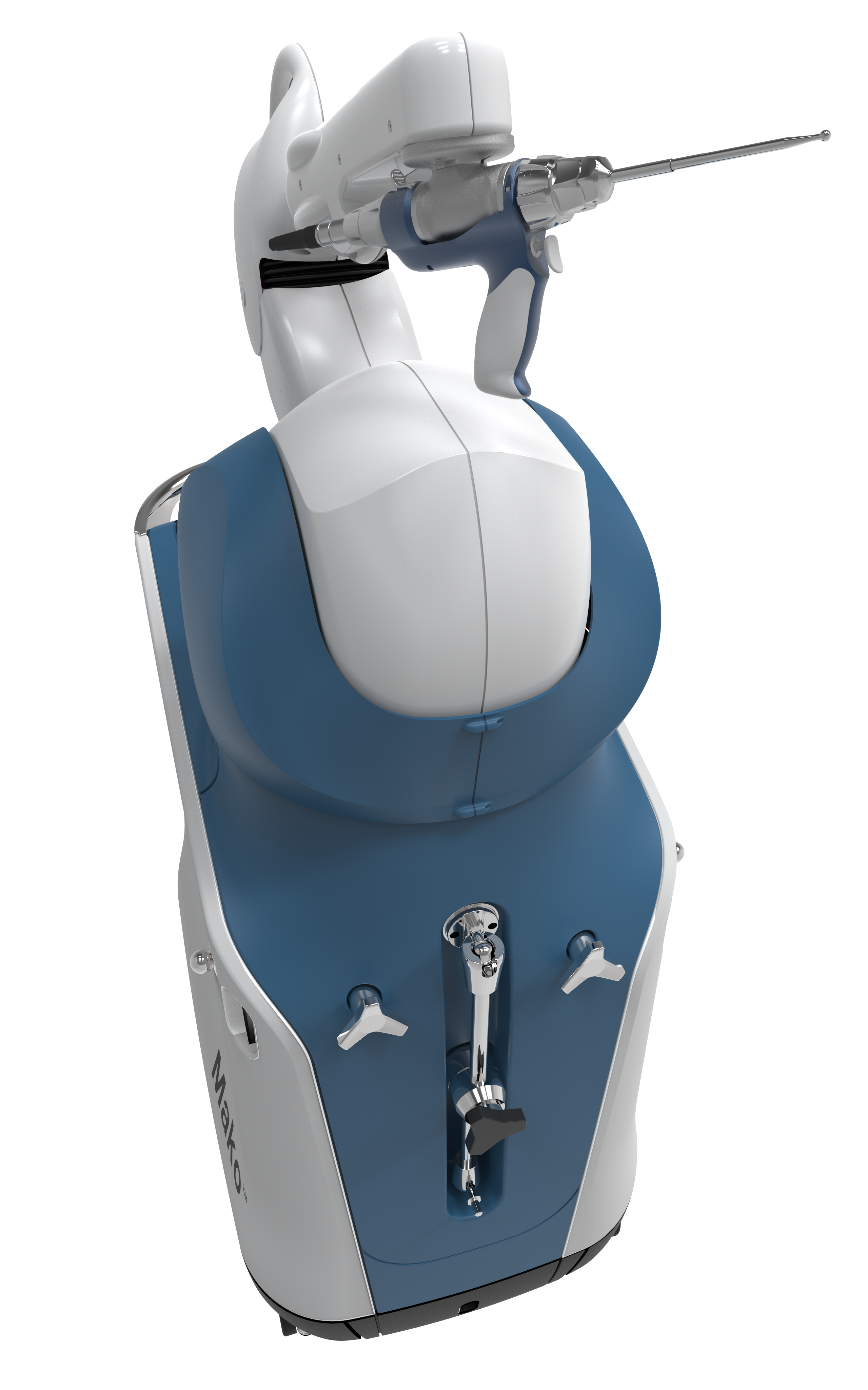
The Mako Smart-Robotics System utilises a navigation computer and an ultra-precise cutting tool to help the surgeon implant your new hip in the most optimal position possible. Mr Kucheria has been using this Mako robot at the Princess Margaret Hospital for over 4 years now and has performed > 200 joint replacements with it.
At Castleview Clinic we are pleased to offer Robotic-Assisted Total Hip Replacement the latest technology in hip surgery.
The Mako Smart-Robotics System utilises a navigation computer and an ultra-precise cutting tool to help the surgeon implant your new hip in the most optimal position possible. Mr Kucheria has been using this Mako robot at the Princess Margaret Hospital for over 4 years now and has performed > 200 joint replacements with it.
How does it work?
Prior to your surgery a CT Scan (a three-dimensional Xray) is performed of your arthritic hip. This creates a map of the hip joint that is fed into the robot’s computer.
The operation is performed under a spinal anaesthetic and your surgeon begins the procedure in the normal way by delicately parting the muscles to exposure the hip joint. He then uses a small probe to point the robot’s navigation system to the bony anatomy of your hip joint.
Once all registered, the robotic cutting arm can be brought into the surgical field and very precisely it removes small slivers of bone from your arthritic hip to make way for the new joint.
Once the bony cuts are done Mr Kucheria will implant your new prosthetic hip and check the stability before closing the tissues back over the joint.
How does it work?
Prior to your surgery a CT Scan (a three-dimensional Xray) is performed of your arthritic hip. This creates a map of the hip joint that is fed into the robot’s computer.
The operation is performed under a spinal anaesthetic and your surgeon begins the procedure in the normal way by delicately parting the muscles to exposure the hip joint. He then uses a small probe to point the robot’s navigation system to the bony anatomy of your hip joint.
Once all registered, the robotic cutting arm can be brought into the surgical field and very precisely it removes small slivers of bone from your arthritic hip to make way for the new joint.
Once the bony cuts are done Mr Kucheria will implant your new prosthetic hip and check the stability before closing the tissues back over the joint.
What are the advantages of robotic-assisted surgery?
- More accurate placement and alignment of hip implants based on the surgical plan
- Replication of the feeling of a natural hip
- Less likelihood of hip dislocation
- Reduced blood loss
- Preservation of healthy bone
- Less post-operative pain with an earlier discharge home