
Patellofemoral instability refers to dislocation of the knee-cap. Patellofemoral instability normally first becomes a problem in teenagers and young adults. It is less common for it to become a problem for the first time in older adults.
Patellofemoral instability refers to dislocation of the knee-cap. Patellofemoral instability normally first becomes a problem in teenagers and young adults. It is less common for it to become a problem for the first time in older adults.

Many people with first-time dislocation can be treated with physiotherapy after careful examination and imaging to quantify the reasons for the dislocation and the chance of recurrence. Surgery may be required if the instability becomes a recurrent problem despite adequate physiotherapy. In a small number of patients, a piece of the joint surface and underlying bone may be knocked loose during a dislocation and will require surgery to either fix or remove the loose piece.
The surgeons at Castleview Clinic see a high volume of patients with patellofemoral instability each year and have developed well-established treatment pathways involving important contributions from local radiologists and physiotherapists with whom we work closely.
There can be many reasons for patellar instability, and often multiple reasons in the same patient. The key step in treating patellofemoral instability is recognizing which of these possible causes are most important, and deciding whether any need to be modified by surgery prior to beginning rehabilitation with a physiotherapist.
These factors include the overall alignment of the limb, the bony anatomy of the knee, the laxity of the ligaments around the knee, and the strength of muscles in the thigh as well as those of the gluteal area and core.
Thorough history-taking and clinical examination are often the best guide to which of these factors are present. This clinical suspicion is usually further investigated with an MRI scan, though sometimes xray or CT scan of the whole limb may be required. The radiologists we work with are used to reporting the particular measurements we look for on the scans.
Collaboration between surgeons is a strength of Castleview Clinic, and this is particularly important in treating patients with patellofemoral instability. We regularly discuss those in whom we have identified multiple possible causes for instability. This discussion allows us to decide which combination of surgeries is most likely to restore stability while minimizing the impact to the patient.
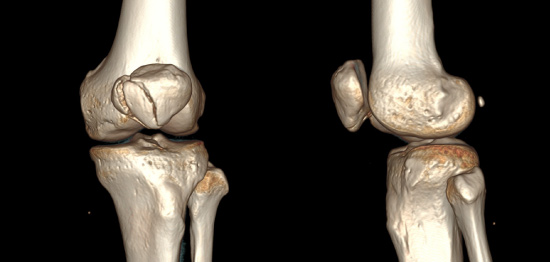
Possible surgery may include femoral or tibial osteotomy, tibial tubercle osteotomy, or medial patellofemoral ligament (MPFL) reconstruction. In cases where there is no bony abnormality, MPFL reconstruction may be performed in isolation.
Regardless of which, or any, surgery is performed, rehabilitation under the supervision of a physiotherapist is crucial. At Castleview Clinic we are fortunate to have close relationships with excellent local physiotherapists who are familiar with our post-operative instructions and are able to keep us up-to-date with our patients’ progress.
There can be many reasons for patellar instability, and often multiple reasons in the same patient. The key step in treating patellofemoral instability is recognizing which of these possible causes are most important, and deciding whether any need to be modified by surgery prior to beginning rehabilitation with a physiotherapist.
These factors include the overall alignment of the limb, the bony anatomy of the knee, the laxity of the ligaments around the knee, and the strength of muscles in the thigh as well as those of the gluteal area and core.
Thorough history-taking and clinical examination are often the best guide to which of these factors are present. This clinical suspicion is usually further investigated with an MRI scan, though sometimes xray or CT scan of the whole limb may be required. The radiologists we work with are used to reporting the particular measurements we look for on the scans.
Collaboration between surgeons is a strength of Castleview Clinic, and this is particularly important in treating patients with patellofemoral instability. We regularly discuss those in whom we have identified multiple possible causes for instability. This discussion allows us to decide which combination of surgeries is most likely to restore stability while minimizing the impact to the patient.
Possible surgery may include femoral or tibial osteotomy, tibial tubercle osteotomy, or medial patellofemoral ligament (MPFL) reconstruction. In cases where there is no bony abnormality, MPFL reconstruction may be performed in isolation.
Regardless of which, or any, surgery is performed, rehabilitation under the supervision of a physiotherapist is crucial. At Castleview Clinic we are fortunate to have close relationships with excellent local physiotherapists who are familiar with our post-operative instructions and are able to keep us up-to-date with our patients’ progress.